Restoring Function to Failing Pond Structures
Pond Repair and Maintenance in Williamson for properties experiencing water loss, eroded banks, or drainage failures in existing ponds
Erosion carves channels through pond dams during heavy rain events, creating structural weaknesses that worsen with each subsequent storm. Water levels drop visibly over days or weeks when clay liners develop cracks from drought cycles or root penetration from vegetation growing on dam slopes. Outflow structures fail to control water release, causing either uncontrolled drainage during storms or insufficient discharge that threatens dam stability. Jason Scott Grading and Clearing addresses these failures through pond repair and maintenance work in Williamson, Georgia, restoring the structural integrity and water management function residential, agricultural, and recreational ponds require.
Repair work involves identifying where structural failures occur—whether in the dam face, the clay core, the spillway structure, or the pond bottom—then applying the appropriate correction. Eroded areas get reshaped and compacted using clay fill material, leaks get addressed by repairing the clay seal layer, and drainage structures get cleared or rebuilt to function as designed. The approach depends on what inspection reveals about failure causes and how the pond's intended use affects required water levels and retention capacity.
Request an evaluation of your pond's current condition to identify specific repair needs and restoration options.
What Structural Repairs Actually Fix
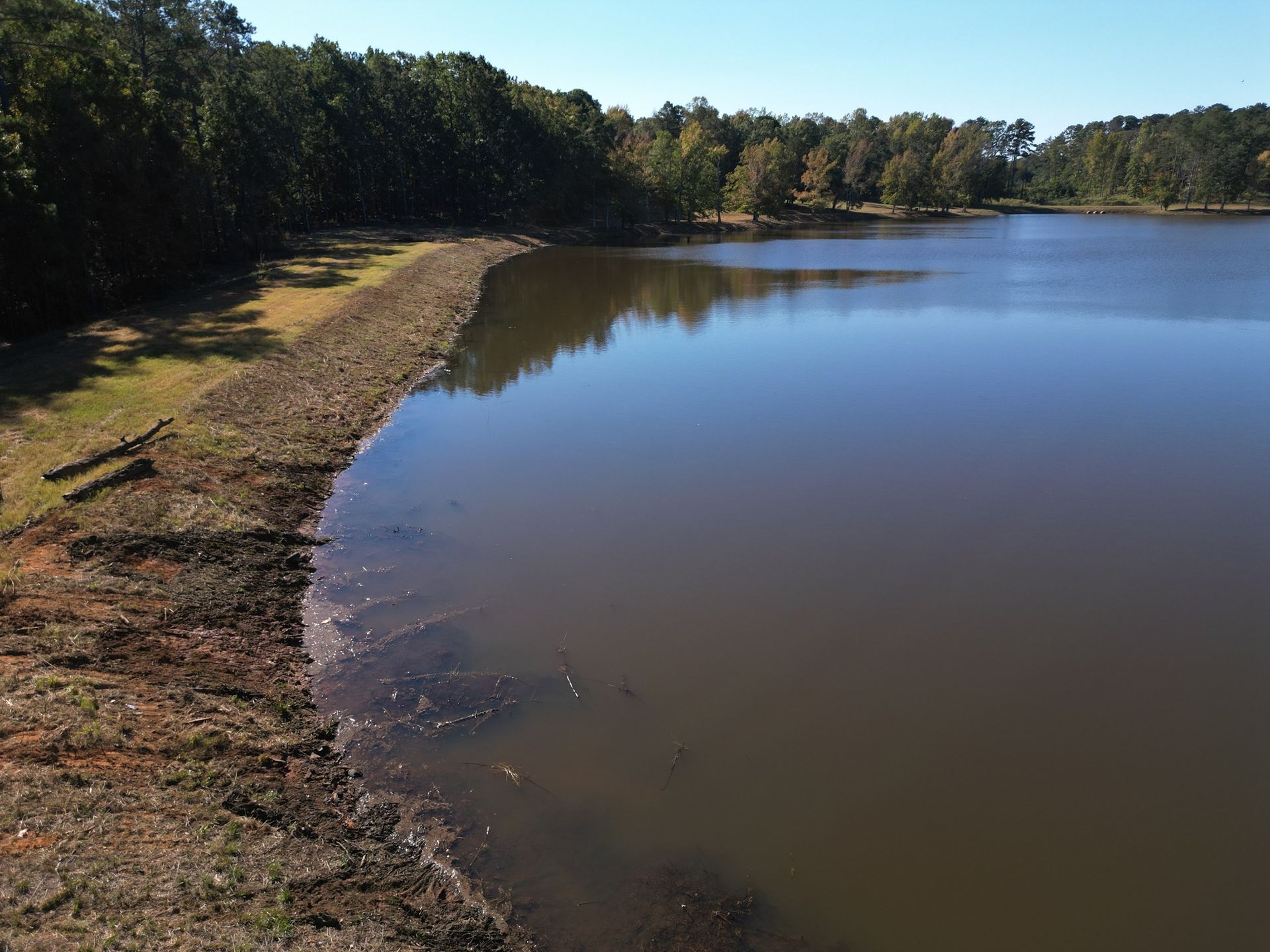
Pond repairs address the mechanisms causing water loss or structural instability rather than simply adding more water or temporarily patching visible damage. Restoring the clay core in a dam prevents seepage that undermines structural stability, while properly graded slopes resist erosion from wave action and storm runoff. Functional spillways control water release during high-flow events without causing downstream erosion or threatening the dam structure itself. Each repair targets the specific failure mode affecting that pond's performance.
After repairs complete, you see water levels that remain stable rather than dropping between rain events, dam slopes covered with established vegetation instead of bare erosion channels, and outflow structures that handle storm discharge without overflow or structural damage. The pond holds water consistently for its intended livestock, irrigation, or recreational use instead of functioning only during wet periods.
Maintenance includes addressing vegetation management on dam slopes, spillway clearing, and periodic inspections to catch minor issues before they develop into structural failures. The scope of repair work varies based on pond age, original construction quality, and how well past maintenance addressed developing problems. Some ponds require only minor repairs while others need substantial reconstruction of failed dam sections or liner areas.
Questions Before Starting Your Project
Understanding what pond repair involves helps property owners make informed decisions about restoration work and ongoing maintenance.
What causes ponds to lose water even without visible leaks?
Clay liners develop microscopic cracks during drought periods or from root penetration, creating seepage that doesn't produce obvious wet spots but steadily lowers water levels.
How do you determine whether a pond can be repaired or needs rebuilding?
The extent of dam erosion, the condition of the clay core, and whether the original construction included proper compaction and materials determine if repairs will restore function or if reconstruction is required.
When should pond maintenance happen to prevent major repairs?
Annual inspections after storm seasons allow you to address minor erosion, vegetation problems, and spillway issues before they compromise structural integrity.
What happens during the repair process for leaking ponds?
Repairs involve draining or lowering water levels to access damaged areas, removing compromised material, applying new compacted clay fill, and allowing time for settling before refilling.
Why do ponds in Williamson experience specific types of failures?
Clay soils common in central Georgia provide good liner material but crack during dry periods and erode easily when vegetation doesn't adequately cover dam slopes—repair methods account for these regional soil behaviors.
Jason Scott Grading and Clearing offers free estimates following site inspections that assess your pond's structural condition and water retention issues. Reach the office at (678) 972-2367 to schedule an evaluation and discuss repair approaches suited to your property.