Clearing Overgrown Land Without Disturbing Soil
Forestry Mulching and Brush Mowing in Williamson for properties with heavy vegetation requiring clearing while minimizing ground disturbance and erosion risk
Dense underbrush, sapling growth, and overgrown vegetation make properties inaccessible and increase fire risk in dry conditions common during Georgia summers. The accumulated organic material prevents usable access, obscures property boundaries, and harbors invasive species that spread without management. Jason Scott Grading and Clearing uses forestry mulching and brush mowing techniques to clear this vegetation while leaving a protective mulch layer that reduces erosion and returns nutrients to the soil, avoiding the bare ground and soil disruption that traditional clearing methods create.
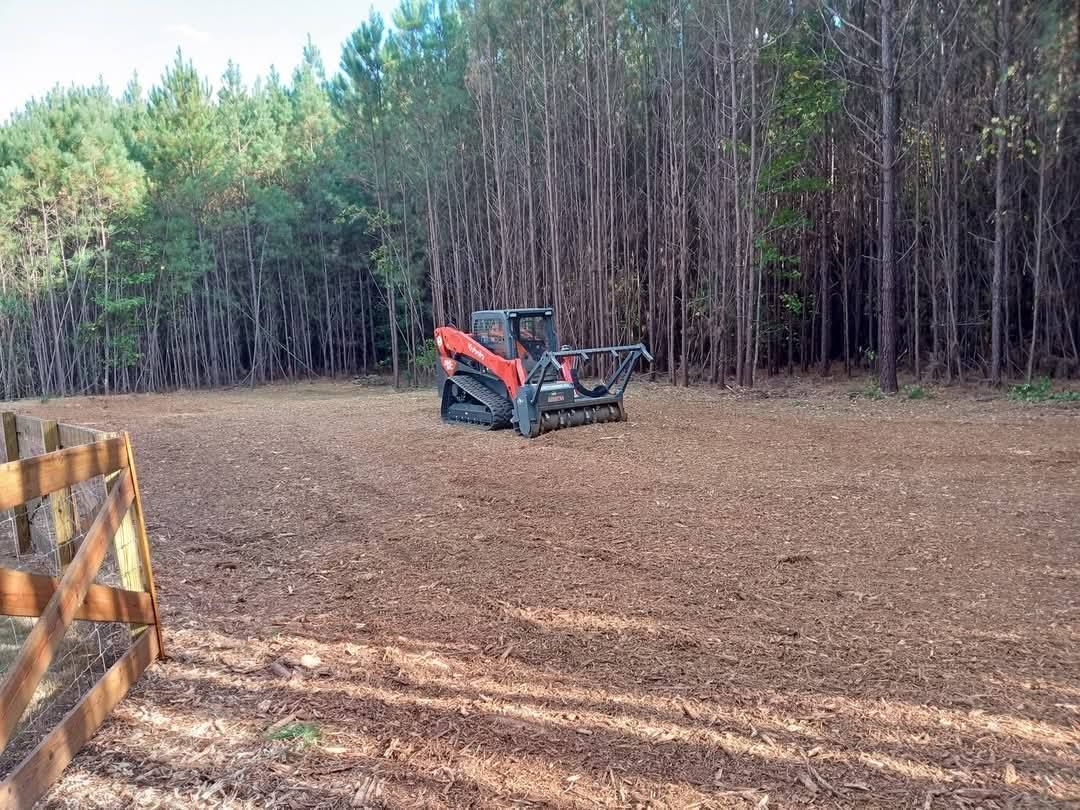
Forestry mulching involves grinding vegetation in place using specialized equipment that processes trees up to several inches in diameter, brush, and undergrowth into mulch that remains distributed across the cleared area. This approach eliminates the need for burning, hauling debris, or disturbing topsoil with repeated equipment passes. The mulch layer left behind suppresses weed regrowth, retains soil moisture, and decomposes over time to improve soil structure.
Schedule a property walkthrough to identify the vegetation density and clearing approach your land requires.
Why Mulching Prevents Erosion After Clearing
Traditional clearing removes vegetation and often strips the topsoil layer, leaving bare ground exposed to rainfall that causes sheet erosion and gully formation. Forestry mulching leaves a protective organic layer covering the soil surface, absorbing rainfall impact and slowing water movement across slopes. The mulch layer stabilizes disturbed soil while native grasses and desirable vegetation establish, particularly on properties with slopes where erosion risk increases after clearing.
After mulching and brush mowing finish, you see cleared sight lines and accessible ground covered with an even layer of shredded organic material rather than bare soil. The property remains passable for vehicles and equipment without the ruts and compaction that occur on unprotected cleared land. Invasive species and dense undergrowth no longer block access, while the mulch layer prevents the dust and mud conditions that bare soil creates.
The service works for trail creation, property line clearing, land preparation before construction, and ongoing vegetation management on agricultural or recreational properties. Projects vary based on vegetation density, terrain accessibility, and whether selective clearing around desirable trees is required. Mulching does not remove stumps or address large-diameter hardwoods that exceed equipment capacity.
Common Questions About This Service
Property owners preparing to clear overgrown land often ask these questions about the mulching process and its effects.
What size vegetation can forestry mulching equipment handle?
Mulching equipment processes brush, saplings, and trees typically up to six to eight inches in diameter, grinding them into mulch without requiring separate hauling or disposal.
How does mulching compare to burning for land clearing?
Mulching avoids the permitting requirements, air quality concerns, and fire risk associated with burning while leaving beneficial organic material on-site rather than removing all vegetation.
When should mulching happen to prevent regrowth?
Clearing during the growing season allows you to monitor regrowth and address any persistent invasive species, while fall and winter clearing reduces the vigor of sprouting from cut vegetation.
What happens to the mulch layer over time?
The mulch decomposes gradually, adding organic matter to the soil while suppressing weed growth for one to two growing seasons depending on climate and mulch depth.
Why is ground disturbance a concern when clearing land in Williamson?
Central Georgia's clay soils and rolling terrain make disturbed ground prone to erosion during heavy rains—mulching protects the soil surface while vegetation clearing occurs.
Jason Scott Grading and Clearing provides estimates that account for your property's vegetation type, terrain, and intended use after clearing. Call (678) 972-2367 to discuss your land management needs and project timeline.