Getting Stuck Equipment Back to Solid Ground
Equipment and Vehicle Recovery in Williamson for vehicles and machinery stuck in mud, overturned on slopes, or stranded in wooded or inaccessible terrain
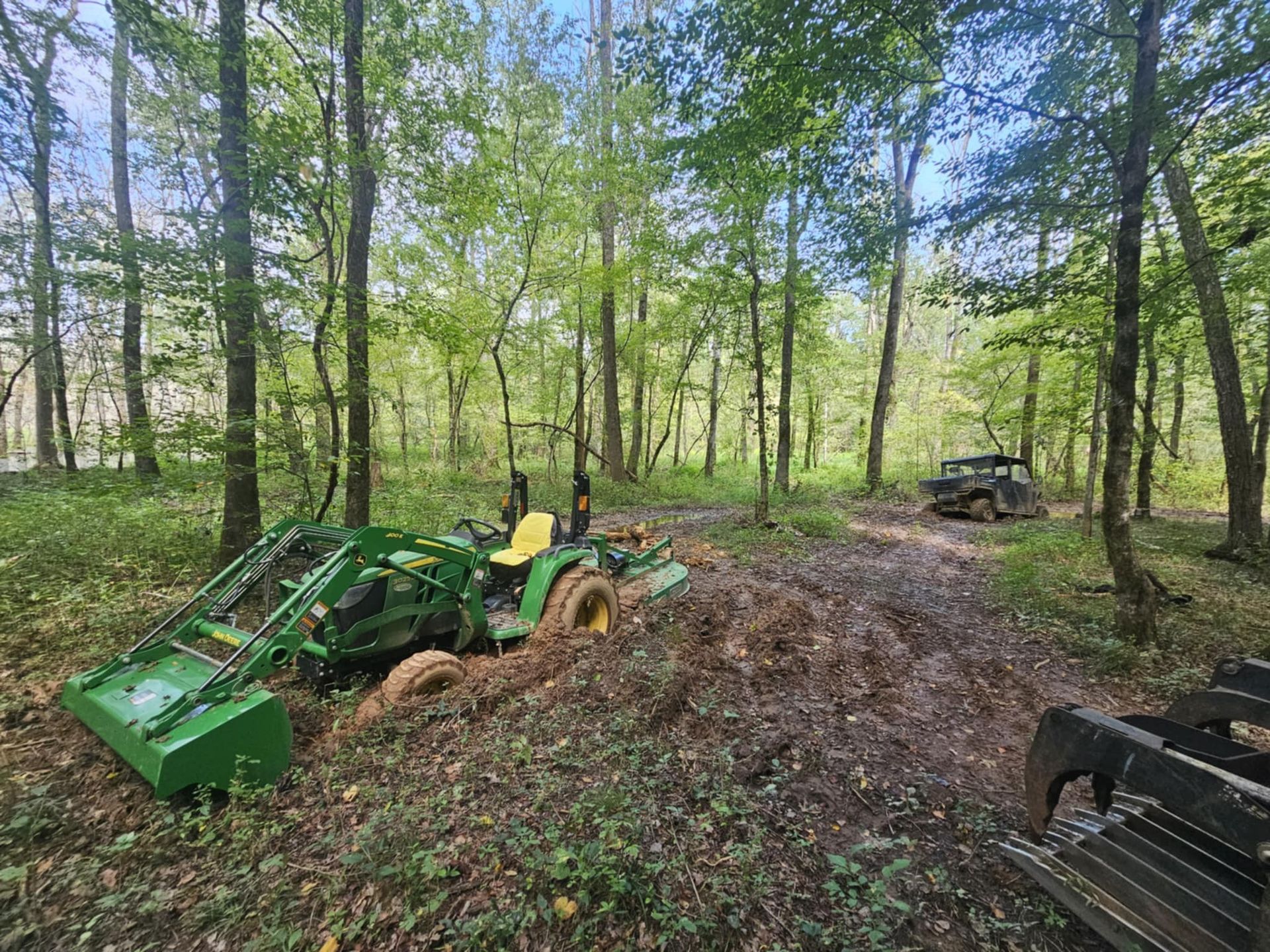
When a tractor sinks axle-deep in a wet pasture or a truck slides off a gravel drive on a slope, the equipment isn't just stuck—it's blocking work, creating a safety hazard, and potentially sinking deeper with every attempt to free it. Recovery work addresses the immediate problem of extracting the vehicle without causing further damage to the machine, the ground, or surrounding structures. The process requires equipment capable of pulling or lifting from stable ground, rigging that distributes force safely, and an understanding of how soil conditions affect traction and anchoring.
Jason Scott Grading and Clearing provides equipment recovery across Williamson, where rural properties, construction sites, and farm operations regularly deal with challenging terrain. Soft clay soils common in the area lose stability quickly after rain, and wooded lots or sloped land create access problems that standard tow trucks can't handle. Fast response minimizes the time equipment sits idle and reduces the risk of the vehicle settling further into unstable ground.
Call for immediate recovery assistance when equipment is stuck, overturned, or inaccessible and normal operation is halted.
What You Notice Once Recovery Is Finished
Recovery begins with assessing the vehicle's position, the surrounding terrain, and the safest extraction angle. Rigging is attached to structural points on the vehicle designed to handle load, not to bumpers or body panels that can tear away under tension. The extraction happens slowly and steadily to prevent jerking that could damage drivetrain components or cause the recovery equipment to lose footing. If the vehicle is overturned, stabilization comes first to prevent rolling during the lift.
After recovery, the equipment is back on stable ground, upright, and accessible for inspection or transport. You'll notice the area around the stuck vehicle may show ground disturbance from the extraction, but the machine itself is free from additional damage caused by improper pulling or rushed attempts. If the vehicle was blocking a road, driveway, or work area, that access is restored immediately so other operations can continue.
The service focuses on damage prevention during extraction—pulling from the wrong angle or using inadequate rigging can bend frames, snap axles, or tear body mounts. Recovery doesn't include mechanical repairs to the vehicle, but it does return the equipment to a position where it can be evaluated, driven away, or loaded onto a trailer. Properties with recurring stuck-vehicle problems may benefit from grading or drainage improvements to prevent future incidents, but those are separate projects addressed after the immediate recovery is complete.
Common Questions About This Service
Operators and property owners dealing with stuck or overturned equipment often ask these questions before recovery work begins.
What types of equipment can be recovered from difficult terrain?
The service handles a range of vehicles including tractors, trucks, excavators, ATVs, and trailers stuck in mud, ditches, slopes, or wooded areas where standard towing equipment can't operate safely.
How quickly can recovery happen after a vehicle gets stuck?
Response time depends on scheduling and location, but the focus is on reaching the site as soon as possible to prevent the vehicle from sinking further or weather conditions from worsening the situation.
What determines the recovery method used for a stuck vehicle?
Factors include the vehicle's weight, how deeply it's stuck, soil stability around the site, available anchoring points, and whether the machine is upright or overturned, all of which affect rigging and equipment choices.
How does recovery work differ in wooded areas versus open terrain?
Wooded sites require smaller equipment that can navigate between trees, and rigging may attach to anchor trees rather than recovery vehicles, while open terrain allows larger machines to position directly for pulling or lifting.
What should operators avoid doing before recovery help arrives?
Don't repeatedly attempt to drive out under power, as this digs the vehicle deeper and turns stable soil into slurry, making extraction harder and increasing the risk of drivetrain damage from high-RPM spinning in Williamson's clay-heavy soils.
Jason Scott Grading and Clearing responds to recovery calls throughout Williamson when vehicles and equipment are stranded and normal operations are disrupted. Reach out by phone at (678) 972-2367 when you need extraction assistance to minimize downtime and prevent additional damage.