Surfaces That Handle Daily Traffic
Driveway Repair and Maintenance in Williamson for gravel and dirt driveways suffering from washouts, rutting, and drainage problems
Repeated rainfall in central Georgia creates washouts where gravel migrates downslope, leaving exposed dirt and deep ruts that worsen with each passing vehicle. Potholes develop where the base layer erodes from beneath the gravel surface, creating depressions that collect water and deteriorate further. Driveways become impassable for standard vehicles during wet periods, limiting property access for residents, deliveries, and service vehicles. Proper grading directs water off the driveway surface instead of allowing it to run down the center or collect in low spots. Jason Scott Grading and Clearing handles driveway repair and maintenance for gravel and dirt surfaces across Williamson, addressing these drainage failures and structural deterioration to restore reliable access.
Repair work involves regrading the driveway surface to establish crown or cross-slope that sheds water, filling eroded areas and potholes with compacted base material, and adding new gravel where the surface layer has worn away or washed off. The process accounts for how water flows across and along the driveway during storms, creating the grades and drainage paths that prevent future washouts.
Schedule an inspection to assess your driveway's current damage and determine the grading corrections required.
Why Proper Grading Prevents Recurring Washouts
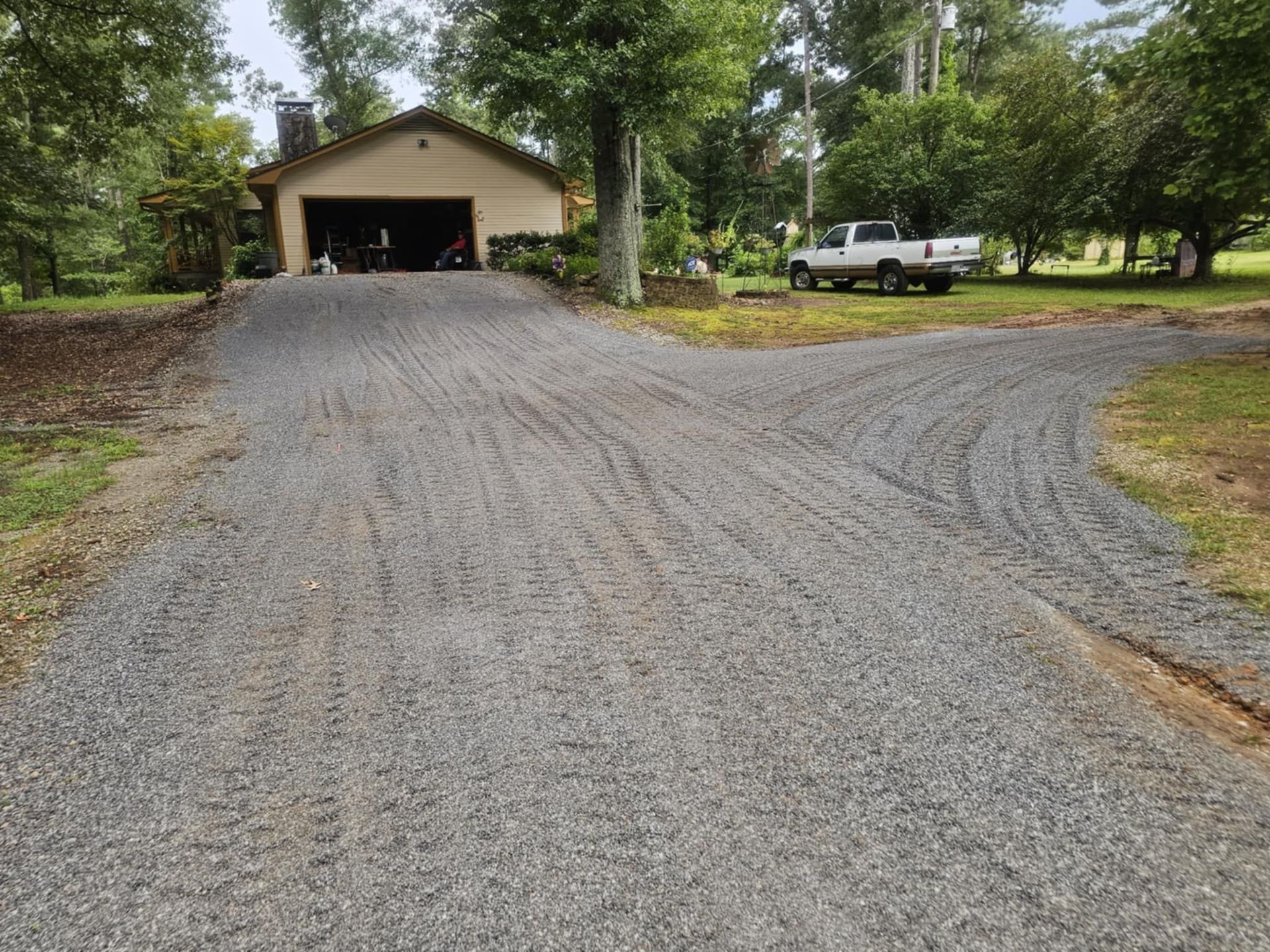
Driveways without adequate crown or outslope allow water to run along the surface, gaining velocity and carrying gravel and base material downhill with it. Proper grading creates a convex cross-section or consistent outslope angle that directs water off the driveway into vegetated areas where it absorbs rather than continuing to erode. Turnouts and water bars at intervals intercept flow on long or steep driveways, preventing the concentrated erosion that creates deep channels. These grading features work with gravel compaction to create a surface that resists rutting from traffic and remains passable during wet weather.
After repair and grading finish, you see a driveway surface that sheds water to the sides during rainfall instead of developing center channels or standing puddles. Vehicles travel without bottoming out in potholes or getting stuck in soft areas, and the gravel layer remains in place rather than washing away with each storm. The driveway provides reliable access for daily use and heavier equipment like delivery trucks without deteriorating under normal traffic loads.
Maintenance includes periodic gravel replenishment as the surface layer wears, grading to restore crown as traffic compacts and flattens the profile, and addressing any new drainage issues before they develop into major washouts. The frequency of maintenance depends on traffic volume, driveway slope, and how effectively existing drainage features manage stormwater. Driveways serving agricultural properties or heavy equipment require more frequent attention than those handling only passenger vehicle traffic.
What Property Owners Usually Ask
The following questions address practical concerns about maintaining gravel and dirt driveway surfaces over time.
What causes potholes to form in gravel driveways?
Potholes develop where water infiltrates and erodes the base layer beneath the gravel, creating voids that collapse under traffic weight—repairs involve removing loose material, filling the void with compacted base, and restoring the gravel surface.
How often do gravel driveways need regrading?
Grading frequency depends on traffic, slope, and rainfall, but most driveways benefit from grading every one to three years to restore crown and address minor erosion before major repairs become necessary.
When should gravel be added versus regrading the existing surface?
Thin gravel layers that expose the base layer require additional material, while driveways with adequate gravel depth often just need grading to redistribute material and restore proper crown.
What type of gravel works best for driveway surfaces?
Angular crushed stone compacts better and resists displacement compared to rounded river gravel, providing a more stable surface that handles traffic without rutting.
Why do some driveways in Williamson wash out repeatedly?
Clay-heavy soils common in the region become slippery when wet and don't absorb water quickly—driveways without proper grading concentrate runoff that erodes both gravel and base layers during storms.
Jason Scott Grading and Clearing provides detailed estimates following driveway inspections that identify drainage problems and structural deterioration. Call (678) 972-2367 to discuss your driveway's condition and schedule repair work that restores dependable property access.